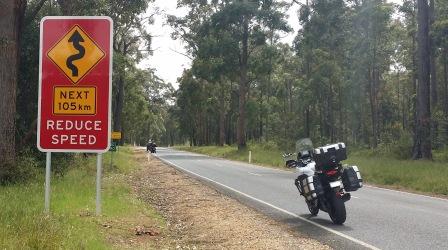
If you are the first person at a crash, you can assist until trained help arrives.
Make sure someone calls 000 for an ambulance.
(In remote areas, where there is no mobile phone coverage, call 112 for help).
To effectively manage casualties and the accident scene, follow the St John DRABC action plan.
Danger Response Airways Breathing Circulation
DANGER – Check for danger. Make sure it’s safe to approach the injured person.
RESPONSE – Confirm whether the injured person is conscious or unconscious. Shake them lightly, ask them questions or give them simple instructions. If they are unresponsive, they are unconscious.
AIRWAY – Protect the airway by rolling the injured person onto their side. Remember that a neck injury may have been sustained so you’ll need to support their neck whilst they are being rolled – keep their spine aligned to prevent causing further damage to their neck and spine.
BREATHING – Once the injured person is lying on their side, clear their mouth of any obstructions (such as blood, vomit or loose teeth). Now make sure they’re breathing. (See section on “Restoring breathing” if they are not)
CIRCULATION – Apply direct pressure with bandages or clothing to stop any bleeding. If possible, elevate areas of bleeding to chest height. Keep the injured person as still as possible. You can prevent movement to the spine or any broken bones by packing clothing and equipment around them.

St John (NSW) conducts motorcycle First Aid training courses. They can also supply you with a specialised first aid kit. Call 1300 360 455 for details.
Additional tips on how to help motorcycle victims
Making the scene safe – if you are at the crash on your own, don’t risk your own life –
- Use your hazard lights to warn others
- Turn off the ignition in crashed vehicles to avoid a petrol fire
- Seek help from others to warn oncoming traffic
- Light the area – with your headlights
- Extinguish lit cigarettes
- Keep away from fallen power poles
- If power lines are touching a vehicle, stay away and call the local electricity provider.
Determine who’s been injured
- Check for victims in all crashed vehicles and look around for dazed or confused people
- Check if anyone is unconscious and make them a priority. Clear their airway and check breathing (DRABC).
- Do not remove unconscious victims from their car unless they are in danger of further injury and require life-saving first aid. For example, if they are not breathing and their head is slumped forward gently lift their head to see if they start breathing. You can cause serious additional injuries when moving an injured person.
- Encourage conscious people to remain as still as possible and remain conscious
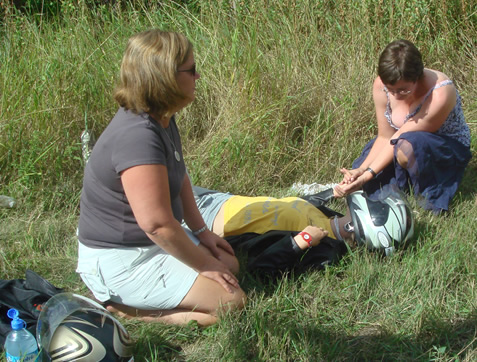
Assisting an injured rider or pillion
The first rule is – leave the person’s helmet on until the Ambulance arrives. They will often leave it on until they get to the hospital where it can be removed without putting any strain on the person’s neck. Trying to remove a helmet can kill the person or leave them a quadriplegic if they have received a serious neck injury.
Victims with an open face helmet…
- If conscious, crash victims may remove their own helmet.
- If unconscious do not remove their helmet – roll the victim onto their side into the Recovery Position (see below), check their airways & check their breathing. Support their head and neck when you roll them onto their side.
- If breathing, leave them on their side and maintain support for their head and neck.
- If not breathing, help to restore it (see section on “Restoring breathing”).
Victims with a full face helmet…
- Raise the visor.
- Clear the airway & check breathing.
- If unconscious do not remove their helmet – roll the victim onto their side into the Recovery Position (see below), check their airways & check their breathing. Support their head and neck when you roll them onto their side.
- If not breathing, help to restore it (see “Restoring breathing”).
- If you think the persons’ helmet needs to be removed to restore breathing be aware that by doing so you may cause more injury or kill the person.
Many Paramedics have been trained and having experience using a specific technique for successfully removing a person’s helmet at the crash scene. They will only remove the helmet if all other options for restoring breathing have been tried. The technique is taught at some Motorcycle First Aid Courses which may be useful if you need to assist a Paramedic when they arrive.
Remember to stay with the person and monitor their condition. If they begin to lose consciousness ensure they are placed into the Recovery Position – see below.
Airways, Breathing & Circulation
Clearing the airway…
- If an injured person is unconscious, you might have to remove them from their vehicle to assist them to restore breathing. But handle them gently & minimise movement
- Place the injured persons on the ground – put them in the Recovery Position
- Kneel beside the victim.
- Place the victim’s arm that is furthest from you at right angles to their body. Fold their other arm across their chest.
- Bend one of the victim’s knees (the knee closet to you) and straighten the other.
- Hold the victim’s hip & shoulder that is closest to you and gently roll them onto their side
- If help is available, steady the head & neck whilst turning & support any broken limbs.
- Loosen clothing at the neck, chest & waist.
- Tilt the head back & point the face slightly toward the ground so that blood & vomit can drain.
- Remove anything that might obstruct the airways (blood, vomit, loose teeth, dirt etc).
- Check for breathing by watching for the chest to rise & fall & listening for air escaping from the nose or mouth.
- If the victim is unconscious & breathing leave them on their side & ensure that their airway remains clear.
- If, after clearing the victim’s airway they are still not breathing, roll them onto their back and start mouth-to-mouth resuscitation
- Tilt head back, support the victim’s jaw & keep your fingers clear of the throat
- Support the jaw of infants & young children but do not tilt the head back
- Seal the victim’s mouth with your lips & their nose with your cheek or pinch their nose
- Blow into the victim’s mouth until their chest rises
- Lift your mouth, watch for their chest to fall, listen & feel for air escaping from the nose & mouth
- If the chest doesn’t rise, check:
- For blocked airway
- Mouth-to-mouth seal
- Blow again – a little harder
- Continue mouth-to-mouth resuscitation until breathing is restored.
- Blow every 4 seconds with adults
- Blow every 3 seconds with children
- For victims trapped in vehicles, clear the airway, tilt the head back, support the jaw and check for breathing.
- Commence mouth-to-mouth if necessary to restore breathing
- Stop bleeding by placing direct pressure on the wound (with whatever’s available). Elevate bleeding limbs.
- Do not use a tourniquet & if the victim complains of numbness, tingling or pain, loosen the bandage – it’s too tight
- Do not remove foreign objects from bleeding wounds. Apply pads & bandage them around the wound.
- Comfort/reassure conscious victims
- Stay calm
- Minimise movement in all victims
- Watch victims, ensuring that they don’t wander off
- Never give victims food or drink of any sort. You can moisten their lips – but only with water.
- Never leave unconscious victims alone
- Dial 000 (or 112 if there’s no mobile service), for emergency services
- Stop a pedestrian or passing motorist if you have no phone & ask them to seek help.
- Provide emergency services with detailed information (the number of victims & the degree of injuries sustained; the crash location – including street names, signs, distance, landmarks; the type/s of emergency vehicles required; & the presence of fallen power lines).